Expertise
Industrial
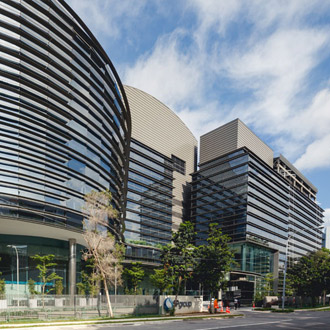
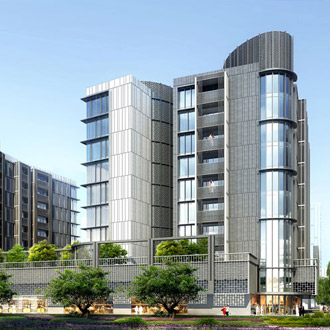
The industrial building typology represents a unique set of conditions that challenge designers to think about utilitarian buildings that could transform the environment. Starting from our first factory building project, the Yeo Hiap Seng factory at Dunearn Road, to the recent President’s Design Award-winning Sunray Woodcraft Construction headquarters, DP Architects has eschewed the typical enclosed factory building type with monotonous appearance and severe massing to create refreshing and dynamic alternatives.
DP has helped to redefine the industrial building typology with design solutions that not only optimise the operating processes, but are at the same time attractive, promote the well-being of the occupants, and instil pride and purpose in the owners and employees. Besides addressing the functional and efficiency requirements of the client, users, context and climate, DP’s factory building designs consider ventilation, landscaping, circulation and plan layouts for greater efficiency and collaboration, colour palette and material choices, and scale to ensure a human-centred experience within an industrial environment.
DP has helped to redefine the industrial building typology with design solutions that not only optimise the operating processes, but are at the same time attractive, promote the well-being of the occupants, and instil pride and purpose in the owners and employees. Besides addressing the functional and efficiency requirements of the client, users, context and climate, DP’s factory building designs consider ventilation, landscaping, circulation and plan layouts for greater efficiency and collaboration, colour palette and material choices, and scale to ensure a human-centred experience within an industrial environment.
Projects Involved:
Retail
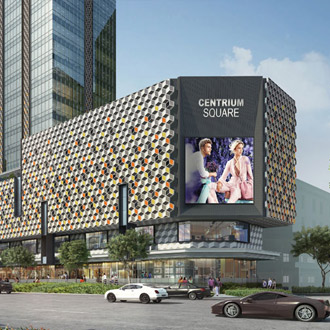
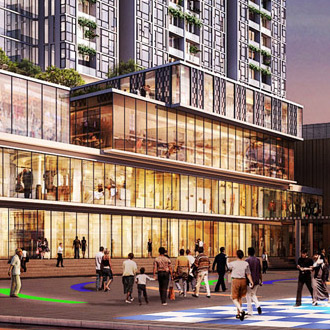
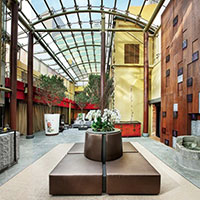
Shopping is about the pleasure of authentic discovery, an urban adventure that is about creative and spontaneous exploration. In an increasingly mobile and digital age, fresh interpretations of the spatial experience of the physical mall are essential. Urban malls make up many of today’s largest public places, and are often planned to accommodate a breadth of activities. DP Architects has been involved in retail projects of increasing scale and complexity since the 1960s; some so large, like The Dubai Mall, they perform as micro-urbanisms. Building at this scale becomes a practice of experiential planning. Experiential space planning embraces human movement. The architecture of the pedestrian is appreciated on foot. Experiential retail has come to represent the architecture and urbanism of mall complexes, the activities these multifunctional spaces offer and the social and cultural dynamics that emerge within them.
DP implements architecture and planning techniques to accommodate a host of additional functional requirements for the modern, urban mall. The social and commercial importance of the mall continues to grow, and as it does, DP explores ways by which the public spaces of retail can evolve to meet the needs of each new generation of consumers. Seeing malls as generators of social activity, supporting and integrating the increasingly convergent social and lifestyle needs, DP’s mall designs inject life and vibrancy through softer social spaces. Having undertaken the design and transformation of many shopping malls along Orchard Road and in cities around the world over the years, DP has built an extensive expertise on different types of shopping mall concepts that has put the firm on the forefront of retail development in Asia.
DP implements architecture and planning techniques to accommodate a host of additional functional requirements for the modern, urban mall. The social and commercial importance of the mall continues to grow, and as it does, DP explores ways by which the public spaces of retail can evolve to meet the needs of each new generation of consumers. Seeing malls as generators of social activity, supporting and integrating the increasingly convergent social and lifestyle needs, DP’s mall designs inject life and vibrancy through softer social spaces. Having undertaken the design and transformation of many shopping malls along Orchard Road and in cities around the world over the years, DP has built an extensive expertise on different types of shopping mall concepts that has put the firm on the forefront of retail development in Asia.
Projects Involved:
Sports & Recreation
Participating in sports and recreation is an incredibly communal experience. Sporting experiences can activate communities as well as generate revenues. We see sports and recreation as integral to the everyday life of the entire community. Delivering thriving sports facilities takes a dedicated team of experts with global expertise in large-scale place-making and the branding of destinations. Each of our sports and recreation facilities are thus inspired by their surroundings and by the unique culture and spirit of the community and institution that they serve. We design for teams, the spectators’ experience and those pursuing exercise for recreational purposes and personal wellness. We seek to inspire with exceptional environments conducive to fitness, made of quality construction and interesting materials that architecturally support meaningful sports activities.
DP's experience in sports development ranges from community facilities to sports infrastructure of international stature, sports-anchored mixed-use developments as well as a series of complex master plans and proposals worldwide.
For themed recreational venues, we understand the desire for authentic, tangible and bespoke experiences will propel this industry’s growth. We endeavour to design venues that provide immersive, interactive and collective social opportunities that continually adapt to the changing economics of each leisure activity and need.
DP's experience in sports development ranges from community facilities to sports infrastructure of international stature, sports-anchored mixed-use developments as well as a series of complex master plans and proposals worldwide.
For themed recreational venues, we understand the desire for authentic, tangible and bespoke experiences will propel this industry’s growth. We endeavour to design venues that provide immersive, interactive and collective social opportunities that continually adapt to the changing economics of each leisure activity and need.
Projects Involved:
Residential
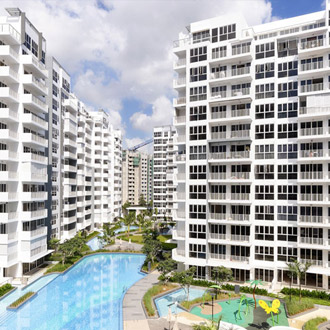
Residential designs are about creating quality environments to nurture communities, beyond the inclusion of functionalities and the fulfilment of commercial requirements. DP's residential projects are designed in ways that jointly celebrate the benefits of city dwelling, yet offer spaces that break from the city – places offering both community and a harbour for the comforts of private life. Housing patterns must continually respond to the needs of the city, as new developments situate people in existing or future spaces for work and play. Residential projects, and particularly those for high-density urban blocks, have the potential to dramatically alter the city by injecting it with new regions of vibrancy that remain active both day and night.
DP has considered each of its housing projects with reference to its site, its regional urban placement, and its climate. With each urban residential project, DP seeks to provide a unique set of formal and functional characteristics with which inhabitants can individually identify. In each residential housing scheme, DP negotiates between views and environmental orientation to optimally immerse residences within their surroundings. With high-density residential projects, DP investigates a variety of techniques in plan, layout, indoor-outdoor spatial relationships, and form to develop new housing types specialised for urban settings and grounded in the characteristics of the local community.
DP has considered each of its housing projects with reference to its site, its regional urban placement, and its climate. With each urban residential project, DP seeks to provide a unique set of formal and functional characteristics with which inhabitants can individually identify. In each residential housing scheme, DP negotiates between views and environmental orientation to optimally immerse residences within their surroundings. With high-density residential projects, DP investigates a variety of techniques in plan, layout, indoor-outdoor spatial relationships, and form to develop new housing types specialised for urban settings and grounded in the characteristics of the local community.
Projects Involved:
Mixed-use Development
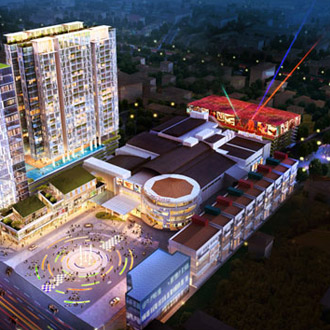
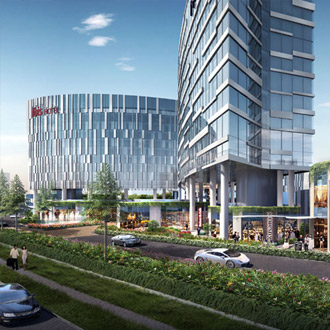
With greater emphasis on the quality of civic life, designers are tasked with redefining urban spaces in more dynamic, inhabitable and sustainable ways. DP's work in the mixed-use typology exemplifies the firm’s commitment towards enhancing cityscapes, by creating destinations that serve as strong social centres with opportunities for human interaction within the urban fabric. Whether a single mixed-use block or a zoned network of buildings and spaces that cater to various aspects of urban life, DP places a strong emphasis on understanding local conditions and addressing the different requirements and overlapping needs of various groups to reinvent urban spaces as vibrant destinations sensitive to the landscape and context.
A pioneer in this typology, DP is the firm behind the first mixed-use development in Singapore, People’s Park Complex. Since then, DP has continued to lead in this evolving and complex typology, successfully bringing together distinct programmes in a single destination, consistent to the motto of ‘Live, Work, Play’, to satisfy the needs of modern lifestyles. Programmes are planned to generate synergetic relationships, engaging users and vitalising the development. In large-scale developments, intersections, connecting spaces and circulation paths function as streetscapes to support the key programmes, infused with greenery and choreographed to invite exploration and allow various groups to flow between the various zones with great ease and opportunity within the integrated development.
A pioneer in this typology, DP is the firm behind the first mixed-use development in Singapore, People’s Park Complex. Since then, DP has continued to lead in this evolving and complex typology, successfully bringing together distinct programmes in a single destination, consistent to the motto of ‘Live, Work, Play’, to satisfy the needs of modern lifestyles. Programmes are planned to generate synergetic relationships, engaging users and vitalising the development. In large-scale developments, intersections, connecting spaces and circulation paths function as streetscapes to support the key programmes, infused with greenery and choreographed to invite exploration and allow various groups to flow between the various zones with great ease and opportunity within the integrated development.
Projects Involved:
Office
The modern workplace is changing rapidly and is transforming to become more flexible, agile, mobile, and even playful. Offices now need to be designed for an innovation-led economy, where a diversity of spaces within the development can be created to foster social interaction, inspiration, creativity, collaboration and improve overall efficiency. This is to cater to an agile and collaborative workforce on its way to greater innovation.
Commercial buildings and office spaces need to evolve for the future in line with changing user requirements and lifestyle needs, such as the need for common areas like cafes, staff cafeterias, cosy meeting rooms and conference rooms, places to relax and hang out, places to interact with colleagues and friends, collaborative spaces where people can work on-the-go, and access to nature and outdoor spaces.
On top of creative working environments, there are new business models and concepts to consider that take advantage of the rise in entrepreneurship and breakdown of the traditional office model, to appeal to how younger employees and entrepreneurs wish to work. These include co-working spaces with shared facilities that allow start-ups with complementary services and offerings to rent a space together and benefit, or co-working spaces equipped with technology to allow flexibility in where you work. Our track record includes the planning and building design of high-rise office towers, mixed-use complexes with offices, and industrial and technology parks. With 50 years of experience as one of the largest architectural practices in the world, we have expertise in designing many business and industrial developments which are highly sensitive and responsive to its context.
Commercial buildings and office spaces need to evolve for the future in line with changing user requirements and lifestyle needs, such as the need for common areas like cafes, staff cafeterias, cosy meeting rooms and conference rooms, places to relax and hang out, places to interact with colleagues and friends, collaborative spaces where people can work on-the-go, and access to nature and outdoor spaces.
On top of creative working environments, there are new business models and concepts to consider that take advantage of the rise in entrepreneurship and breakdown of the traditional office model, to appeal to how younger employees and entrepreneurs wish to work. These include co-working spaces with shared facilities that allow start-ups with complementary services and offerings to rent a space together and benefit, or co-working spaces equipped with technology to allow flexibility in where you work. Our track record includes the planning and building design of high-rise office towers, mixed-use complexes with offices, and industrial and technology parks. With 50 years of experience as one of the largest architectural practices in the world, we have expertise in designing many business and industrial developments which are highly sensitive and responsive to its context.
Projects Involved:
Hospitality
Hotels are designed to establish a unique personal identity, interwoven with the surroundings to celebrate a powerful sense of local character, while encouraging visitors to feel at home in a new place. Design processes for these projects are equally concerned with being immersed in local culture as they are with fostering a level of autonomy – creating a buffer between the room and the city to harbour comfort and privacy. DP pursues a holistic approach in its hospitality building design, one synthesising the technical and the functional to correspond with the highest standards of service to deliver an unforgettable experience.
Each project is designed dynamically to capture the unique energy of its site, with connections to the city that are contextual and specialised. Restoration and adaptive re-use projects reconfigure existing heritage buildings and present guests with both the historical and the contemporary. Addition and alteration projects reposition existing structures within the city’s denser fabric to create new urban relationships. For resorts situated within the urban fringe, built spaces are distributed across the landscape to bind guests intimately with nature. These urban hotels are programmed to blend a range of spaces – indoor and outdoor, private and public, small and large in scale – to facilitate social engagement and civic vibrancy.
Each project is designed dynamically to capture the unique energy of its site, with connections to the city that are contextual and specialised. Restoration and adaptive re-use projects reconfigure existing heritage buildings and present guests with both the historical and the contemporary. Addition and alteration projects reposition existing structures within the city’s denser fabric to create new urban relationships. For resorts situated within the urban fringe, built spaces are distributed across the landscape to bind guests intimately with nature. These urban hotels are programmed to blend a range of spaces – indoor and outdoor, private and public, small and large in scale – to facilitate social engagement and civic vibrancy.